Think about your inbound motion today:
- A prospect visits your site, clicks an ad, or finds your number.
- They call or submit a form.
- Your team tries to respond… when they’re free.
In reality:
- Calls come in when reps are on other calls.
- Forms land in shared inboxes that no one “owns.”
- Time zones, off-hours, and weekends slow everything down.
By the time someone follows up, the prospect has moved on, forgotten the context, or already talked to a competitor. The intent was real – but your system didn’t meet it in time.
Why “We’ll Call You Back” Isn’t Enough
Modern buyers expect the same thing from B2B and B2C brands:
- Instant acknowledgement
- A simple, human way to explain what they need
- A clear next step without friction
Traditional lead gen tools – static forms, generic chatbots, manual callbacks – struggle here. They create delays, ask the wrong questions, or feel too transactional. The result is more admin, not more conversations.
Your team isn’t failing. The workflow is.
A Different First Line of Contact
Now imagine your inbound funnel working differently.
Every time someone raises their hand – by calling, clicking to call, or tapping a “talk to us” button –
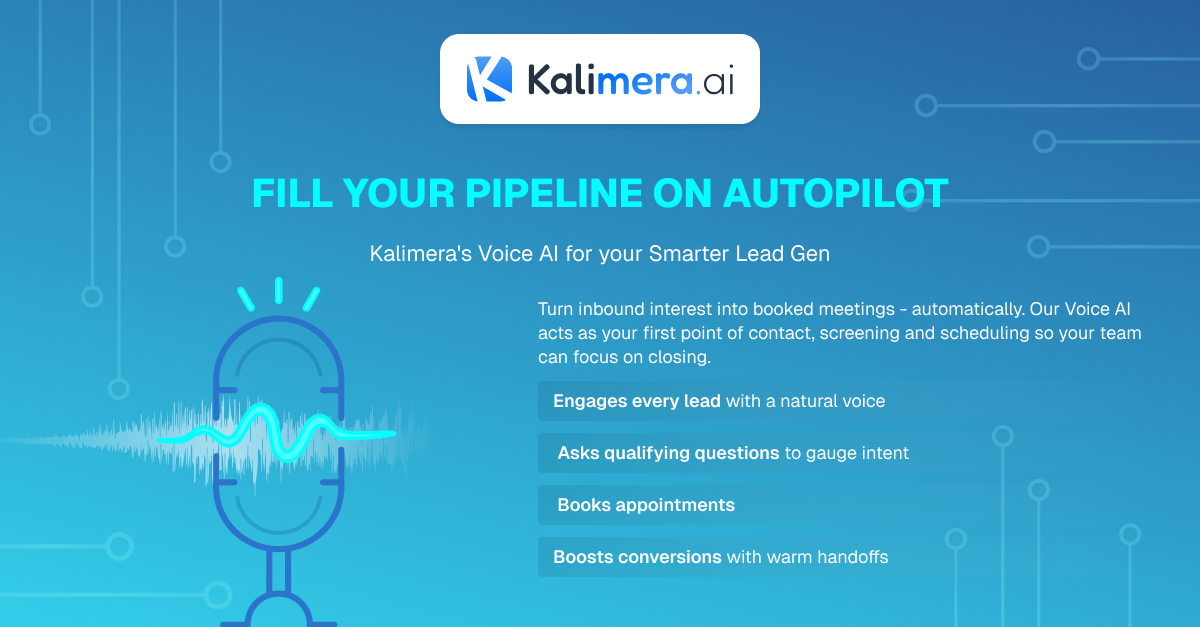
an intelligent voice assistant answers immediately.
Not a “Press 1, press 2” menu. A natural voice that leads a short, focused conversation.
It:
- Greets the lead right away
- Asks a few smart qualifying questions
- Confirms interest and urgency
- Offers available time slots
- Books the meeting on the spot
By the time your team sees the event on their calendar, they already know who they’re speaking with, what they’re interested in, and why the conversation matters.
What Changes for Your Team
For sales and marketing, this kind of voice-led intake doesn’t replace the human relationship – it sets it up better.
- Less chasing, more closing
Reps stop spending hours trying to reach people who have gone cold. They show up to calls that are already confirmed and context-rich.
- Cleaner qualification from the start
The right questions – budget, timeline, use case, role – are asked the same way, every time. No one forgets to ask something important.
- Better use of everyone’s time
High-intent leads get fast attention. Low-fit leads are filtered out early. Your team’s energy goes where it has the highest chance of impact.
- Smoother handoffs
When the assistant passes a lead to a human, it feels like a continuation, not a restart. Prospects aren’t forced to repeat themselves.
What Changes for the Lead
For the person reaching out, the experience feels very different:
- They don’t wait in a queue or wonder if someone will ever reply.
- They explain their needs in their own words, not through rigid form fields.
- They leave the interaction knowing exactly when they’ll talk to a real person.
It feels less like “submitting a request” and more like “starting a conversation.”
That emotional shift – feeling guided instead of ignored – is what makes them show up, engage, and ultimately buy.
Is Your Inbound Motion Working for You – or Against You?
If you’re running demand gen, sales, or growth, ask a few simple questions:
- How many inbound leads never get a live touch?
- How long does it actually take, on average, to respond to a new inquiry?
- How many meetings on your calendar came from true inbound intent – not manual chasing?
If the honest answers make you uncomfortable, that’s a sign your first line of contact needs to evolve.
Where to Start
You don’t need to redesign your whole funnel overnight. Start small:
- Identify one high-intent entry point (e.g., “Talk to sales” or inbound calls).
- Map the ideal conversation: what you’d want a rep to ask every time.
- Consider how an intelligent voice assistant could handle that first touch – qualifying, capturing context, and booking time – before your team steps in.
From there, you can expand to more channels, territories, or product lines as you see the impact.
Because in the end, growing your pipeline isn’t just about generating more leads. It’s about respecting every signal of interest – and meeting it with the kind of response you’d want if you were the one reaching out.
Wanna grow your pipeline
Want to grow your pipeline without burning out your team?
Let’s explore how Kalimera.ai can turn every inbound call into a qualified opportunity.
Leave a Reply